
Shisha buyer guide · Article 223
Shisha Charcoal Binder Disclosure: What Buyers Can Reasonably Request
Request product-specific ingredient information, define the purpose of each declaration and protect proprietary formulation details. Keep supplier answers, supporting evidence and unresolved questions separate.
01 · Define the question behind the request
Ask for a usable declaration, with a defined purpose.
Shisha charcoal binder disclosure should start with the decision the buyer needs to make. Is the request about ingredient identity, a customer exclusion list, a proposed packaging statement, destination documentation or a change between orders? Different questions need different evidence. Sending a broad request for the full recipe often leaves the actual buying requirement unclear.
FAO’s general charcoal-briquetting guidance describes a binder as part of forming charcoal fines into briquettes. That background explains why binder information can be relevant; it does not establish which binder Unimax uses. This page makes no claim about the composition, source or proportion of binder in any current Unimax product.
Identify the product, grade or internal product code, proposed order and destination in the request. State the intended use and the exact question requiring an answer. Ask the supplier to identify the scope and basis of its reply, including any unavailable information, instead of treating a general marketing statement as a product-specific declaration.
02 · Separate ingredient information from proprietary formulation
Use a staged disclosure request.
Begin by asking what binder identity or category can be confirmed in writing for the identified product. If botanical or other material origin matters to your requirement, ask whether that origin can be substantiated. A broad answer such as “natural binder” does not resolve a precise source question.
Request confirmation of the particular intentionally added ingredients or excluded substances relevant to your buying brief. Define the requested scope: deliberately added materials, potential carryover, or another specified question. An answer about intentional addition should not silently become a guarantee of absence at every detectable level.
Exact proportions, preparation conditions, supplier identities and process settings may be commercially confidential. Where a justified review needs additional detail, discuss restricted disclosure, an agreed confidentiality arrangement or review by a qualified independent specialist. These are possible arrangements to negotiate, not a promise that every supplier will accept them.
If a supplier provides only a category-level answer, record that level of disclosure. Do not convert it into a named ingredient or exact percentage. If the remaining uncertainty prevents the intended decision, request an alternative evidence route or leave approval open.
03 · Frame allergen and exclusion questions carefully
Do not transplant food-label assumptions into a charcoal claim.
If a customer asks about a particular allergen or source material, name the substance or source and explain the commercial purpose. Ask what the supplier declaration covers, which upstream information supports it and whether handling-related cross-contact has been assessed within that scope. Do not assume that a food ingredient checklist automatically defines the requirements for a non-food charcoal product.
A supplier declaration, upstream material document and laboratory result answer different questions. Record the product and revision covered by each. If testing is proposed, agree the analyte, sample identity, method, reporting limit and question the result is intended to resolve with a suitable laboratory or specialist.
A result for a submitted sample should not be expanded into an unsupported all-batch or all-substance claim. Likewise, an ingredient’s description as food grade does not by itself establish the suitability, emissions or safety of the finished product during its intended use. Avoid proposed pack claims until their exact wording and evidence have been reviewed.
For a hypothetical example, a buyer asks whether a specified source material is intentionally added. A signed reply confirming no intentional addition addresses that question within its stated product scope. It does not automatically address unintended traces, shared-equipment handling or a broader “free from” label. Request those answers separately if they are necessary.
04 · Match documents to the actual review
A document title is not a universal compliance approval.
Ask which current product information, ingredient declaration, safety information or other documents are available for the inquiry. Check issuer, date, product identifier, revision and scope. A document for an upstream binder is not automatically a document for the finished charcoal product.
ECHA describes safety data sheets as communicating substance or mixture properties, hazards and safe-handling information. Use that explanation to understand the document’s purpose. Do not assume that a safety data sheet is a full recipe, product-performance report or approval for every destination.
Have the destination importer and an appropriately qualified adviser establish which documents, classifications, language, labeling or declarations apply to the actual product and route. This buyer checklist does not decide whether a particular safety data sheet or allergen declaration is legally required. Requirements should be checked for the market and transaction before claims are approved.
If two documents conflict, keep both references and request a controlled clarification from the responsible issuer. Do not select the more convenient answer or silently merge different product revisions. Record unresolved points and the person responsible for supplying the correction.
05 · Link disclosure to samples and future changes
Preserve the basis of the buying decision.
Connect the reviewed declaration to the identified product and approved sample where the available records permit. Ask how changes relevant to the agreed ingredient or exclusion statement will be communicated. Record what notification and buyer review are agreed for the order rather than assuming all formulation details will remain fixed forever.
If a proposed change affects the reviewed declaration, request an updated document and assess whether new sample evaluation or specialist review is needed. A finished-cube photograph, ash color or informal burn observation cannot establish binder identity. Keep composition review separate from the agreed finished-product performance checks.
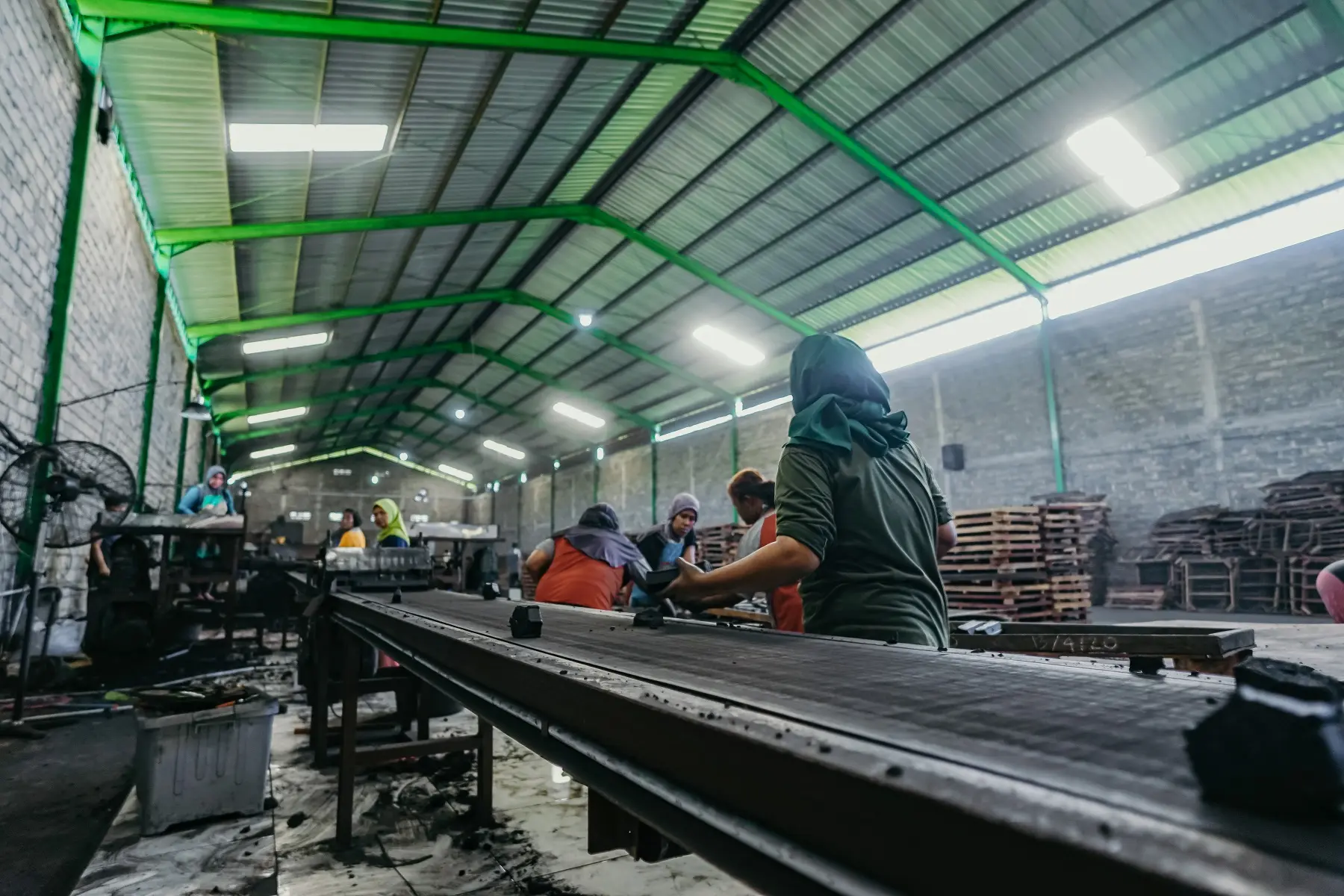
PT Unimax Pro Indonesia has equity ownership and operational control in the production facility. Factory visits and live factory video calls are available. Discuss the production evidence and product-specific declarations available for your inquiry; factory access alone does not substantiate an ingredient or certification claim.
Close the review with a clear decision: sufficient for the stated purpose, further evidence needed, or approval paused. List any accepted limitation and authorized reviewer. Use the checklist below to keep the question, answer and supporting evidence together without requesting an unnecessary recipe.
Buyer tool · binder disclosure request checklist
Ask for the information your decision needs.
Company ___; destination ___; product / sample reference ___; requested declaration purpose ___; intended recipient ___; review deadline ___. This checklist is a request framework, not a current Unimax ingredient declaration or legal determination.
| Request area | Buyer question | Evidence / scope to record | Status / decision |
|---|---|---|---|
| Purpose and identity | Which product, destination and buyer decision does this request cover? | Product code / revision; order; intended use; exact question ___ | Buyer owner / review date ___ |
| Binder description | What identity or category can be confirmed for this product? | Dated supplier statement; source information if relevant and supported ___ | Confirmed detail / information not disclosed ___ |
| Specific ingredients / exclusions | Is the named substance intentionally added under the defined scope? | Exact substance list; question wording; product-specific response ___ | Answered / partial / pending ___ |
| Source / allergen question | What named source concern needs review, and what does the reply cover? | Upstream basis; intentional addition and cross-contact scope separately ___ | Limitation; required follow-up ___ |
| Safety / market documents | Which documents are available and which apply to this inquiry? | Issuer; product identity; date / revision; qualified applicability review ___ | Available / not applicable with basis / pending ___ |
| Testing if justified | Which question can the proposed test actually resolve? | Analyte; identified sample; method; reporting limit; report scope ___ | Specialist review / unresolved question ___ |
| Confidentiality route | Can necessary restricted information be reviewed another way? | Agreed redaction, confidentiality terms or independent review scope ___ | Recipient / permitted use / open gap ___ |
| Change control | How will changes relevant to the reviewed statement be handled? | Notification agreement; revised declaration; sample review reference ___ | Responsible contact / approval route ___ |
| Final decision | Does the evidence answer the stated question? | Reviewed references; conflicts; remaining uncertainty ___ | Proceed / request evidence / pause; approver / date ___ |
Disclosure review record
Question ___; supplier answer ___; document / revision ___; covered product ___; evidence basis ___; unavailable detail ___; agreed alternative ___; unresolved conflict ___; follow-up owner / date ___; authorized buyer decision ___.
Binder disclosure questions
Does this guide disclose the binder used by Unimax?
No. Request a current product-specific response. This page does not state a binder ingredient, source or percentage.
Does a buyer need the full recipe?
Define the decision first. A scoped declaration may answer it; restricted specialist review can be discussed if additional confidential detail is justified.
Does no intentional addition mean a product is free from all traces?
Those statements have different scopes. Ask separate questions about the specific concern, supporting information and handling-related cross-contact if relevant.
Can an SDS settle every ingredient and market question?
Review its product identity, purpose and scope. Establish destination-specific requirements with the importer and a qualified adviser rather than treating one document as universal approval.
Background references
FAO: Briquetting of charcoal, Chapter 11 — general binder and forming context, not a description of Unimax ingredients.
ECHA: Safety data sheets — document-purpose background. Applicability to the actual product and destination needs separate review.
Commercial discussion
Discuss the production evidence your buying decision needs.
Share the identified product, destination, intended volume and the exact ingredient or declaration question behind your inquiry. Discuss available product information, supporting evidence and a qualified live factory call.
Discuss production evidenceFactory and quality evidence · About PT Unimax Pro Indonesia · Shisha charcoal products · Contact Unimax
Related buyer guides
Match approved samples to production · Raw-material variation and batch consistency · Factory audit checklist for buyers